

Slow down, you’re doing fine. You can’t be everything you want to be before your time.” — Billy Joel
In a world that celebrates immediate results and overnight transformations, there’s a quiet rebellion taking place in how we create our homes today. It’s known as the “Slow Living” movement—an approach to design that values gradual evolution over instant completion, and meaningful collection over quick consumption.
The Pinterest Effect
We’ve all experienced that moment of scrolling through perfectly styled interiors, each room more “complete” than the next, each space telling a visual story that seems to have materialized effortlessly and instantly. What these curated squares rarely show is the messy middle. This illusion creates a weird sense of pressure—that our homes should be “finished,” that an empty space is somehow an incomplete space, that a home in progress is somehow less than a home.
What if we’re missing something magical in this rush to completion?
The Beauty of the Unfinished
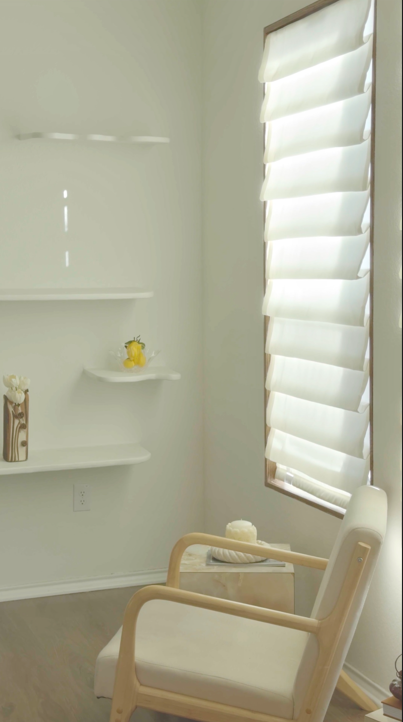
Empty spaces represent possibility rather than absence. They’re not waiting to be filled so much as they’re waiting to be discovered—to reveal what belongs there through the natural course of living.
The Japanese concept of Ma (間) embraces this idea beautifully. It recognizes empty space not as a void to be filled but as an intentional interval that gives meaning to the objects around it. In music, it’s the silence between notes that creates the melody. In home design, it’s the space between objects that allows each piece to be truly seen.
“The most beautiful homes aren’t created overnight – they’re cultivated day by day, choice by choice, story by story.”
Living Comfortably in the In-Between
How do we practice the art of slow home evolution while still creating spaces that feel good to live in? Some principles I’ve embraced:
1. Start with Function, Let Form Follow
A home should work for you before it works for anyone else. Begin with the functional elements that make daily life comfortable – seating that suits your body, lighting and furniture that support your activities, like building a home gym before a game room or vice versa. Once this foundation is established, you can add layers of beauty and meaning at whatever pace feels right.
For our first year in the new house, we focused slowly on improvements that added value to our property and lives: solar system, water filtration system, home gym, food garden, smart appliances, and only necessary furniture.
2. Create “Almost” Vignettes
Rather than trying to perfect entire rooms, focus on creating small moments that feel complete. This might be a reading nook with the perfect chair and lamp, or a coffee station with everything you need for your morning ritual. These “almost” vignettes provide satisfaction and beauty while other areas evolve.
For me, these shelves are a representation of that – my home gallery is practically empty, but the shelves now represent my “almost vignettes” and serve as a reminder of what is to come in that space.
3. Collect, Don’t Shop
There’s a profound difference between shopping to fill space and collecting pieces that speak to you. The former focuses on completion; the latter focuses on connection. When you need something, by all means, find a thoughtful solution. But for the elements that give your home its character, allow yourself the luxury of waiting for pieces that truly resonate.
4. Document the Journey
Photograph your spaces as they evolve. These records become not just practical reference points but meaningful documentation of your home’s story. Looking back at how a space has changed can provide a deeper appreciation for the slow, intentional choices that have shaped it, and I hear it’s a great way to find the negative spaces still waiting to be discovered but have been missed by the eye.
My Case Against Completion
Perhaps the most liberating perspective shift in home design is releasing ourselves from the concept of “completion.” A truly living space is never complete—it’s constantly responding to the people who inhabit it, the lives they lead, the seasons they move through.
This approach doesn’t mean living in perpetual construction or chaos. It means creating a solid foundation of functionality and comfort, then allowing the expressive layers to accumulate naturally over time.
It means recognizing that a home, like a person, is always in the process of becoming.
If you are interested in reading about the project that inspired this reflection, you can find the technical details here.
0 Comments